 ultimate-guide
How Can You Inspect a Used Car Before Buying?
Last Updated: October 29, 2026
Quick Summary
To inspect used car listings before buying, first review a vehicle history report and match its VIN to the car, then check the exterior, interior, and engine bay in daylight. Finish with a structured test drive covering the cold start, steering, brakes, shifting, and noises. Arrange an independent mechanic inspection before you commit.
- A history report is a filter, not a verdict, so compare it against what you see in person.
- Check paint color, panel gaps, and tire wear for signs of past repairs or alignment problems.
- Log test drive findings as you go so you can price issues in negotiation.
- Treat a seller who refuses an independent inspection as a serious warning sign.
Table of Contents
- Why a Pre-Purchase Inspection Matters
- How to Check a Used Car History Report
- Step-by-Step: How to Inspect a Used Car Before Buying
- Pre-Purchase Car Inspection Checklist
- Test Drive Checks for Handling, Brakes, and Noises
- Questions to Ask When Buying a Used Car
- Schedule Your Used Car Inspection and Test Drive at Rusty Eck Ford
- Frequently Asked Questions
Why a Pre-Purchase Inspection Matters
A pre-purchase inspection is a structured check of a used vehicle's condition before you sign anything, and learning to inspect used car purchases this way can help you avoid surprises after the sale. A vehicle history report or a dealer's certification is a useful starting point, but it does not replace a hands-on look at the car (Buying a Used Car From a Dealer). The Federal Trade Commission advises buyers that a history report is not a substitute for an independent mechanical inspection, even when a car is certified or sold with a warranty FTC guidance on buying a used car from a dealer.
This guide walks through a practical sequence you can follow on any used vehicle in Wichita or the surrounding communities. You will learn how to read a history report, inspect the exterior, interior, and engine bay, check the car on a test drive, and know which questions to ask before committing. Work through it in order to catch the problems that matter most.
How to Check a Used Car History Report
A vehicle history report summarizes a car's title, reported accidents, odometer readings, and ownership records, usually pulled by the VIN. Start here because it can rule a car out before you spend time inspecting it. Look for a clean title, consistent mileage entries, and a service history that matches the car's age.
Treat a history report as a filter, not a verdict. A clean report does not mean the car has never been in an accident, since not every repair gets reported. Compare the report against what you see in person: fresh paint on one panel, mismatched paint shades, or uneven panel gaps can point to repairs the report does not show. Check the VIN on the report against the VIN on the vehicle.
Step-by-Step: How to Inspect a Used Car Before Buying
When you inspect used car listings in person, do it in daylight, on dry pavement, and with the engine cold if you can arrange it. A cold start reveals problems that a warmed-up engine can hide.
Exterior, Body, and Tires
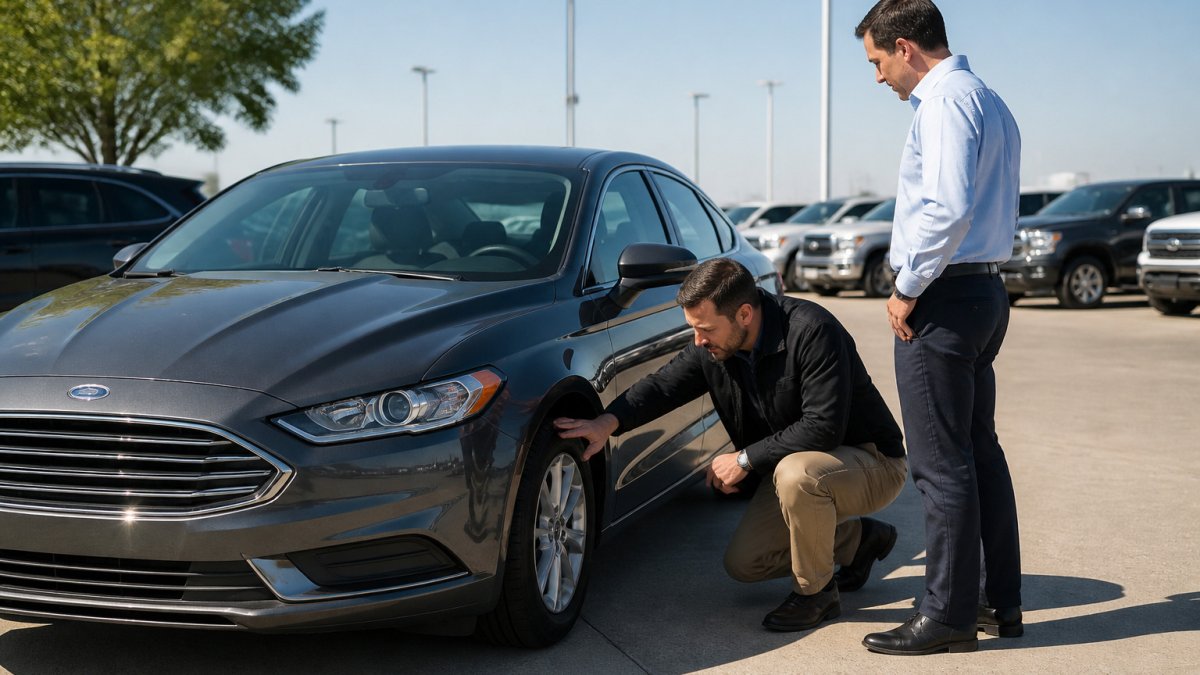
Walk around the vehicle slowly and look at it from several angles. Paint that is slightly different in color or texture from one panel to the next often means a past repair. Check that the gaps between the hood, doors, and trunk are even on both sides. Look along the lower body and wheel wells for rust, bubbling paint, or signs of accident damage.
Check the tires for tread depth and uneven wear. Wear concentrated on one edge can indicate alignment or suspension problems, while cupping or a feathered pattern can signal worn components. Make sure all four tires are the same brand and type, and check the spare if the vehicle has one.
Interior, Dashboard, and Electronics
Sit in the driver's seat and test everything you can reach. Operate the windows, locks, mirrors, climate controls, radio, and lights, including turn signals and hazards. Look at the seats, headliner, and carpets for stains, tears, or signs of water intrusion, such as a musty smell or damp carpet under the floor mats.
Start the engine with the ignition on and watch the dashboard. Warning lights should illuminate briefly and then go out. A light that stays on, or one that never comes on at all, deserves a question. If the check engine light is active, ask for the diagnostic trouble codes to be read before you go further.
Engine Bay and Fluid Leaks
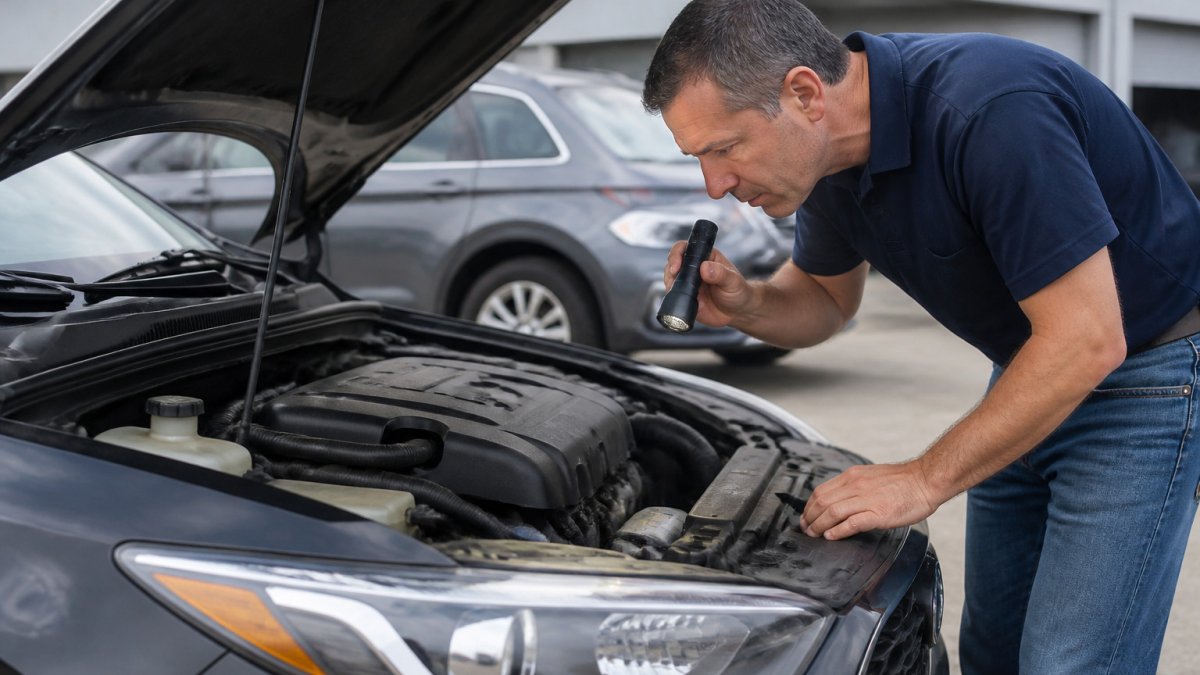
Open the hood with the engine off and look for obvious leaks, wet spots, or residue on the engine, the ground beneath it, and the hoses. Check the oil level and the color of the oil on the dipstick. Coolant should look clean and fall within the marked range on the reservoir. Look for corrosion on the battery terminals and cracked or swollen belts and hoses.
Fluid leaks are often easier to spot after a short drive, but do not rely on that alone. Lay a clean piece of cardboard under the engine overnight if you can, and check it for drips.
Pre-Purchase Car Inspection Checklist
Use this checklist to keep your inspection organized:
- Vehicle history report reviewed and VIN matched on the car
- Clean title and consistent mileage records
- Paint color and panel gaps even across the body
- No rust, bubbling paint, or signs of accident repair
- Tire tread depth and wear pattern checked on all four tires
- All windows, locks, lights, and controls working
- Dashboard warning lights illuminate and turn off after startup
- No musty smell or damp carpet inside the cabin
- Oil level and color checked, coolant level in range
- No fresh fluid leaks or cracked hoses and belts
- Test drive completed on varied roads
- Independent mechanic inspection arranged before you buy
Test Drive Checks for Handling, Brakes, and Noises
The test drive is where a parked inspection meets reality. Plan a route before you leave the lot: a few minutes of residential streets, a stretch of faster road, a couple of turns at moderate speed, and a place where you can brake firmly from about 40 mph. Keep the radio off and the windows up for part of the drive so you can hear the car, then crack a window to listen for wind and road noise.
What to check, in order
- Cold start. Start the car yourself before the seller warms it up. Listen for a long crank, a rough idle, or a puff of blue or white smoke. A cold start is the most honest start.
- Steering and tracking. On a straight, flat road, the car should track straight with the wheel centered. Pulling to one side, a wandering feel, or a wheel that is off-center can point to alignment, tire, or suspension issues.
- Brakes. From about 40 mph on a clear, dry stretch, brake firmly but not to a panic stop. Note pulsing through the pedal (often warped rotors), grinding (worn pads), pulling to one side, or a soft, low pedal. Repeat once to confirm.
- Acceleration and shifting. Merge onto a faster road and accelerate through the gears. An automatic should shift smoothly without slipping, flaring, or harsh engagement. A manual should engage cleanly without grinding. Note any hesitation or surging.
- Noises over bumps. Drive over a few rough patches at low speed. Listen for clunks from the suspension, squeaks from bushings, and rattles from the interior or exhaust.
- Highway behavior. At highway speed, note vibration through the wheel or seat, which can point to tire or driveline issues, and any wander that requires constant correction.
- After the drive. Park on clean pavement, leave the engine running for a minute, and look underneath for fresh drips. Check that the cooling fan cycles and that no warning lights have appeared.
Turning findings into red flags and walk-away criteria
Not every issue is a dealbreaker, but some are. Use this rough hierarchy to decide how to respond:
- Walk away (or insist on a professional inspection before any further discussion): milky oil or coolant mixing, a transmission that slips or flares, a persistent check engine light with active codes, structural rust in the frame or shock towers, evidence of unrepaired collision damage, or a seller who refuses an independent inspection.
- Negotiate: worn tires, worn brake pads, a battery near the end of its life, minor fluid leaks, or a single non-structural cosmetic repair. These are predictable costs you can price and factor into your offer.
- Note and monitor: minor seepage on an older vehicle, a small squeak, or a single cosmetic blemish. These are normal wear items, not bargaining chips on their own.
Connecting the inspection to the offer
Once you have your list, ask the seller for an itemized breakdown of the out-the-door price and compare it against your findings. A car with worn tires and a due-for-service interval is not the same value as one with fresh tires and records. If the seller will not adjust for documented issues, that is useful information, it tells you how they will handle problems after the sale.
When you are ready to put this checklist to work on a specific vehicle, browse our used inventory and schedule a test drive so you can run the full sequence on a car you are seriously considering.
The article breaks the test drive into a sequence of checks, each with a symptom to watch for.
| Check | What to look for | Possible issue |
|---|---|---|
| Cold start | Long crank, rough idle, smoke | Starting or engine problems |
| Steering and tracking | Pulling to one side, wandering | Alignment, tire, or suspension issues |
| Brakes | Pulsing, grinding, pulling, soft pedal | Warped rotors, worn pads, or brake fault |
| Acceleration and shifting | Hesitation, slipping, harsh engagement | Transmission or drivetrain problems |
| Noises over bumps | Clunks, squeaks, rattles | Suspension bushings or loose parts |
| Highway behavior | Vibration, constant correction | Tire or driveline issues |
Questions to Ask When Buying a Used Car
Ask the seller or dealer a few direct questions before you commit. Ask for maintenance records and whether the car has had any recalls performed. Ask whether the vehicle has been in an accident and what was repaired. Ask what the out-the-door price includes, and request an itemized breakdown so you can spot added fees before you sign. Ask whether the vehicle comes with a warranty, what it covers, and how long it lasts.
If you want a deeper walk-through of reading the report itself, see our guide on [how to check a used car history report] before you begin the inspection.
Schedule Your Used Car Inspection and Test Drive at Rusty Eck Ford
Once you know what to look for, the next step is seeing the cars in person. Browse used cars in Wichita to compare options that fit your budget and needs, then come in for a closer look. See which vehicles are on the lot now and schedule your test drive so you can apply this checklist to a car you are seriously considering.
Frequently Asked Questions
How do I check a used car's history report?
Get the vehicle identification number (VIN) from the driver-side dashboard or the driver's door jamb, then run it through a vehicle history report service. Look for title brands, accident records, odometer readings, and service entries. A clean report is useful, but the FTC notes it is not a substitute for an independent mechanical inspection, so pair it with a hands-on check of the car.
Should I get a pre-purchase inspection from a mechanic?
Yes. A mechanical inspection is recommended even when a used car is certified or sold with a warranty or service contract. An independent mechanic can look at the engine, transmission, brakes, and suspension, and can spot problems that a visual check or history report may miss. Ask for a written list of findings before you agree to a price.
What are the biggest red flags when inspecting a used car?
Watch for fluid leaks under the engine, uneven tire wear, rust on the frame or underbody, panel gaps that vary from side to side, paint that does not match across panels, and warning lights that stay on after startup. Any sign of a title brand, mismatched odometer readings, or a seller who refuses an independent inspection is a reason to walk away.
What should I look for during a used car test drive?
Drive on a mix of city streets and highway. Check that the car starts cleanly, shifts smoothly, and brakes straight without pulling. Listen for knocking, squealing, or grinding, and feel for vibration in the steering wheel. Test the air conditioning, heat, windows, and all interior controls while you drive.