 how-to
How to Start a Small Business Fleet: A Step-by-Step Guide
Last Updated: November 8, 2026
Quick Summary
A small business fleet is a group of vehicles a company owns or leases for daily work. To start one, define your fleet needs and goals, build a startup budget and cash-flow model, choose vehicles matched to specific jobs, confirm licenses and insurance, and set up maintenance and tracking.
- Write down the tasks, daily miles, and typical loads each vehicle must handle.
- Separate one-time upfront costs from recurring monthly costs before choosing any vehicle.
- Model cash flow against realistic revenue, since payments often land before invoices are paid.
- Confirm licensing, registration, and insurance requirements with the relevant agencies for your operation.
- Track maintenance records and cost per mile monthly to guide replacement and route decisions.
Table of Contents
- What a Small Business Fleet Is and Who Needs One
- Step 1: Define Your Fleet Needs and Business Goals
- Step 2: Build a Startup Budget and Cash-Flow Model
- Step 3: Choose the Right Vehicles for the Work
- Step 4: Set Up Licenses, Insurance and Driver Requirements
- Step 5: Create a Small Business Fleet Maintenance Plan
- Step 6: Add Fleet Vehicle Tracking Tools and Monitor Performance
- Your Next Step: Booking a Fleet Needs Consultation at Rusty Eck Ford
- Frequently Asked Questions
What a Small Business Fleet Is and Who Needs One
A small business fleet is a group of vehicles a company owns or leases and uses for daily work. Think of a plumber's vans, a landscaping crew's trucks, or a delivery business's cargo vans.
You may need a fleet if your work depends on driving. Common examples include contractors, delivery services, home health providers, and service companies that send technicians to job sites. Some businesses start with one vehicle and grow over time.
- Trades and contractors who drive to job sites
- Delivery and courier services
- Service businesses with technicians on the road
- Growing companies that need reliable transport for staff and equipment
Step 1: Define Your Fleet Needs and Business Goals
Start by writing down what the vehicles must do. Ask how many vehicles you need, how far they will drive, and what they will carry. Be specific about your daily routes and busiest days.
Next, set clear business goals. Decide whether you want to serve more customers, cover a bigger service area, or lower your transportation costs. These goals will guide every later decision, from vehicle choice to budget.
- List the tasks each vehicle must handle
- Estimate daily miles and typical loads
- Set one or two measurable goals for the first year
Step 2: Build a Startup Budget and Cash-Flow Model
Most new fleet owners underestimate costs because they budget for the vehicle and forget everything that surrounds it. A workable model separates one-time startup costs from recurring monthly costs, then maps both against the timing of customer payments. Build it in a spreadsheet before you commit to any vehicle. Once the spreadsheet shows how recurring expenses scale with each vehicle, account for how custom volume pricing may affect the costs of outfitting a larger fleet.
Separate upfront costs from recurring costs
Upfront costs hit once, at or near launch. Recurring costs repeat every month and are the ones that quietly sink new fleets.
- Upfront: down payment or lease inception payment, sales tax and titling, registration, initial insurance premium, upfitting (racks, shelving, partitions, decals), safety and tracking hardware, initial fuel fill, and a repair reserve
- Recurring: loan or lease payment, insurance premium, fuel, preventive maintenance, tires, registration renewals, software subscriptions, driver wages and payroll taxes, and parking or storage
Model the recurring column first, then decide what you can afford up front.
Build a simple monthly cash-flow model
List every recurring cost by month for the first twelve months. Then list expected revenue by month, using conservative assumptions, not your best week. The gap between the two is your monthly cash need, and the largest cumulative gap is the reserve you must fund before launch.
- Column A: recurring costs by month
- Column B: expected revenue by month (use a low, realistic estimate)
- Column C: running cash balance (start with your reserve)
- Column D: cumulative cash position, the lowest point is your true startup requirement
Find your break-even point
Break-even is the number of jobs, routes, or billable hours per month that cover all recurring costs plus debt service. Calculate it per vehicle: fixed monthly costs divided by average revenue per job gives the minimum jobs that vehicle must run to pay for itself. If that number is higher than your realistic pipeline, the vehicle is too expensive for your current demand, downsize the unit or delay the purchase.
Stress-test the model
Run three scenarios: base case, a slow month with 30% less revenue, and a month with one major repair. If the slow-month scenario drains your reserve, you need either more reserve or lower fixed costs. A reserve covering several months of fixed costs can help a business get through a slow quarter.
Watch out: a fleet can look profitable on an annual budget and still fail because payments, insurance, and payroll all land before customer invoices are paid, model the timing, not just the totals. For help matching a Ford work vehicle to your budget, review the Ford Transit Buying Guide and the Ford Ranger Buying Guide before you finalize the numbers.
The table below sums up the cost categories the article separates, so you can check each one against your startup plan.
| Cost type | Examples from the article | When it hits |
|---|---|---|
| Upfront | Down payment, sales tax and titling, registration | At or near launch |
| Upfront | Initial insurance premium, upfitting, tracking hardware | At or near launch |
| Upfront | Initial fuel fill, repair reserve | At or near launch |
| Recurring | Loan or lease payment, insurance premium | Every month |
| Recurring | Fuel, preventive maintenance, tires | Every month |
| Recurring | Driver wages, payroll taxes, software subscriptions | Every month |
| Recurring | Registration renewals, parking or storage | Every month |
Step 3: Choose the Right Vehicles for the Work
Match each vehicle to a specific job. A pickup truck suits hauling equipment, while a cargo van fits tools and parts. Compare payload, cargo space, towing capacity, and fuel economy against your daily routes.
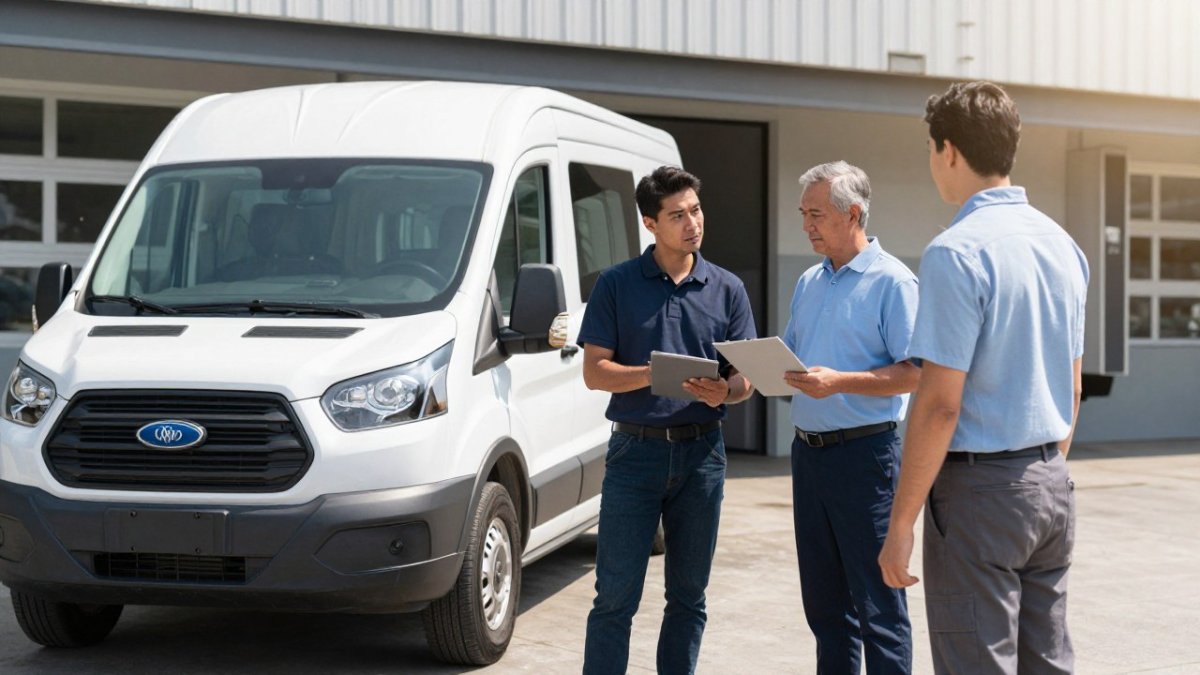
Ford offers several vehicles that many small businesses consider. The 2026 Ford Bronco Sport is a compact option for crews that need capability on rough roads. The Ford Ranger Buying Guide explains trims, engines, and towing for light commercial work. For cargo or crew transport, the Ford Transit Buying Guide covers roof heights, lengths, and seating configurations.
Buying Versus Leasing Your Fleet Vehicles
Buying gives you ownership and no monthly lease terms, but it ties up more cash up front. Leasing usually means lower upfront costs and easier upgrades, but you must follow mileage and wear rules. Compare both options against your cash flow model before deciding.
Step 4: Set Up Licenses, Insurance and Driver Requirements
Compliance is where small fleets get surprised, because the rules that apply to you depend on three things: what the vehicles are, where they operate, and what the business does with them. A plumber's cargo van, a landscaper's pickup, and a box truck hauling freight for hire can face very different requirements even though all three are "company vehicles."
Identify which rules apply to your operation
Work through these questions in order, because each answer narrows the list:
- Vehicle type and weight: light-duty pickups and cargo vans generally face fewer requirements than medium-duty trucks or vehicles above certain weight thresholds. Confirm the gross vehicle weight rating (GVWR) of every unit you plan to buy.
- Operating area: vehicles that stay inside a local service area face different rules than those crossing state lines. Interstate operation can trigger federal motor carrier requirements, so confirm them with the agency that administers those rules.
- Business model: using vehicles to deliver your own product or service is treated differently from hauling freight for hire. For-hire carriage typically brings additional registration, authority, and insurance requirements.
- Cargo: hauling hazardous materials, certain agricultural loads, or oversize equipment adds requirements regardless of vehicle size.
Confirm requirements with the right agencies
Rather than guess, verify each item directly with the agency that administers it:
- State driver licensing and vehicle registration: confirm CDL thresholds, registration classes, and titling steps with your state motor vehicle agency.
- State tax and business registration: confirm sales tax, business registration, and any vehicle-related tax obligations with the Kansas Department of Revenue.
- Federal motor carrier rules: if you operate commercial motor vehicles in interstate commerce, review the Federal Motor Carrier Safety Administration's registration and safety requirements.
- Local rules: check city and county rules for parking, storage of commercial vehicles in residential areas, and any business licensing.
Driver qualification and records
Even where a CDL is not required, set a written driver policy. Require a valid license for the class of vehicle driven, run motor vehicle record checks at hire, and document that each driver has reviewed the policy. Keep copies of licenses, MVR checks, and training sign-offs in one file per driver, this is the kind of record an insurer or auditor may request after an incident.
Insurance and risk management
Commercial auto coverage is different from a personal auto policy, so confirm with your insurer how business use is covered. You can request a free auto insurance quote to compare commercial coverage options for your fleet.
Watch out: assuming a personal auto policy covers a company vehicle can leave gaps in coverage, confirm business use in writing before the first job. For vehicle selection that fits your compliance picture, start with the Ford Transit Buying Guide and compare configurations against your GVWR and cargo needs.
Step 5: Create a Small Business Fleet Maintenance Plan
Regular maintenance keeps vehicles on the road and cuts repair costs. Create a schedule for oil changes, tire rotations, brake inspections, and fluid checks. Follow the manufacturer's recommended service intervals in your owner's manual.
Track every service record in one place. This makes it easier to spot patterns and plan repairs. A simple spreadsheet works for a small fleet.
- Schedule preventive maintenance by mileage or date
- Keep records for every repair and service
- Plan for downtime so jobs are not missed
Step 6: Add Fleet Vehicle Tracking Tools and Monitor Performance
Fleet tracking tools show where vehicles are, how they are driven, and how much fuel they use. GPS tracking and telematics can help you review routes and driving habits over time.
Review performance each month. Look at cost per mile, maintenance spending, fuel use, and vehicle downtime. Use these numbers to decide when to add a vehicle, replace an older one, or adjust your routes.
- Track fuel use and idle time
- Monitor driver habits and safety events
- Compare cost per mile each month
Your Next Step: Booking a Fleet Needs Consultation at Rusty Eck Ford
Starting a small business fleet takes planning, a realistic budget, and the right vehicles for your work. Work through each step, and you will have a clear path from your first vehicle to a reliable fleet. Rusty Eck Ford can help you compare Ford work vehicles and talk through options that fit your goals. Schedule a fleet needs consultation with the team in Wichita to get started.
Frequently Asked Questions
How do I start my own fleet business?
Start by confirming a specific market, such as local contractors, delivery services, or service technicians, and identifying the customers who will pay for vehicles. Write a simple business plan that covers your startup budget, expected monthly costs, and how you will price your services. Then register your business, check which licenses and commercial insurance coverage apply in Kansas, and acquire a small first fleet. Many owners begin with two or three vehicles and add more only after the first ones generate steady revenue.
How many vehicles do you need to have a fleet?
A fleet can begin with as few as two vehicles, though many small businesses consider three or more to be a fleet because it creates enough volume to need scheduling, maintenance tracking and shared records. The right number depends on how many jobs you can book, how far your drivers travel, and whether vehicles need to run at the same time. Start with the number of vehicles your confirmed workload requires, then expand as demand grows.
Should a small business buy or lease fleet vehicles?
Buying usually suits businesses that plan to keep vehicles for many years and want to build equity, while leasing suits owners who want lower upfront costs and predictable replacement cycles. Compare the monthly payment, down payment, mileage limits, maintenance responsibilities and expected resale value for each option. Your cash flow in the first year often matters more than the lowest long-term price, so model both scenarios before you decide.
What records should a small business keep for fleet vehicles?
Keep a file for each vehicle that includes the purchase or lease agreement, title or registration, insurance policy details, service and repair invoices, and mileage logs. Record fuel purchases, tire changes, inspection dates and any accidents or claims. These records help you track cost per mile, plan preventive maintenance, support tax deductions with your accountant, and respond quickly to insurance or compliance questions.