 ultimate-guide
Benefits of Genuine Ford Motorcraft Parts
Table of Contents
- Why Genuine Ford and Motorcraft Parts Matter for Your Vehicle
- Ford OEM vs Aftermarket Parts: Understanding the Difference
- Reliability and Durability You Can Count On
- How to Identify OEM Ford Parts and Verify Authenticity
- Motorcraft Parts Warranty Coverage and Protection
- How to Find the Right Ford Replacement Part for Your Vehicle
- Long-Term Value: Why Genuine Parts Save Money Over Time
- Frequently Asked Questions
Last Updated: October 10, 2026
Why Genuine Ford and Motorcraft Parts Matter for Your Vehicle
When your Ford needs repair or maintenance, you face a choice: genuine Ford motorcraft parts, or aftermarket alternatives. The decision affects reliability, safety, warranty coverage, and long-term costs. At Rusty Eck Ford, we help customers understand why genuine Ford and Motorcraft parts deliver measurable benefits that extend far beyond the initial purchase.
Genuine Ford and Motorcraft parts are engineered specifically for your vehicle's make and model. They fit precisely, perform as intended, and maintain the integrity of your car's systems. Whether you're replacing brake pads, air filters, or engine components, using the correct parts protects your investment and keeps you safer on the road.
Ford OEM vs Aftermarket Parts: Understanding the Difference
The distinction between Ford OEM and aftermarket parts comes down to design, testing, and fit. Original equipment manufacturer parts are built to Ford's exact specifications and tested extensively before reaching dealers. Aftermarket parts are produced by third-party manufacturers and may vary in quality, compatibility, and durability.
Ford OEM parts undergo rigorous quality control and safety testing to meet federal standards and Ford's performance benchmarks. Aftermarket parts face fewer regulatory requirements and testing protocols. This difference becomes critical when you're dealing with safety-related components like brake systems, suspension parts, or electrical components that affect vehicle stability.
The real difference between Ford OEM and aftermarket parts extends to how they integrate with your vehicle's systems. A genuine part designed for your specific model year ensures proper fit and finish, reducing installation complications and potential damage to surrounding components. Aftermarket alternatives may require modifications or may not align perfectly with your vehicle's engineering.
Reliability and Durability You Can Count On
Genuine Ford and Motorcraft parts are built to match your vehicle's original specifications, which means they perform consistently throughout their service life. The engineering behind these parts reflects decades of Ford's automotive expertise and real-world testing data.
Motorcraft parts specifically are engineered to Ford's standards by suppliers who understand the exact demands of each component. A Motorcraft oil filter, for example, is designed to handle your engine's flow rate and pressure requirements without compromising performance. The same precision applies to batteries, coolant, transmission fluid, and every other part carrying the Motorcraft name.
Durability matters because it translates directly to how long your vehicle runs without unexpected failures. Parts that wear prematurely or fail suddenly create safety risks and interrupt your daily routine. Genuine parts reduce the likelihood of these failures by maintaining the performance envelope Ford's engineers designed into your vehicle.
How to Identify OEM Ford Parts and Verify Authenticity
Identifying genuine Ford motorcraft parts starts with the part number. Every Ford OEM part carries a specific part number printed on the packaging and the part itself. You can verify this number through Ford's parts catalog or by calling your local Ford dealership. The part number ensures you're getting the exact component designed for your vehicle's year, make, and model.
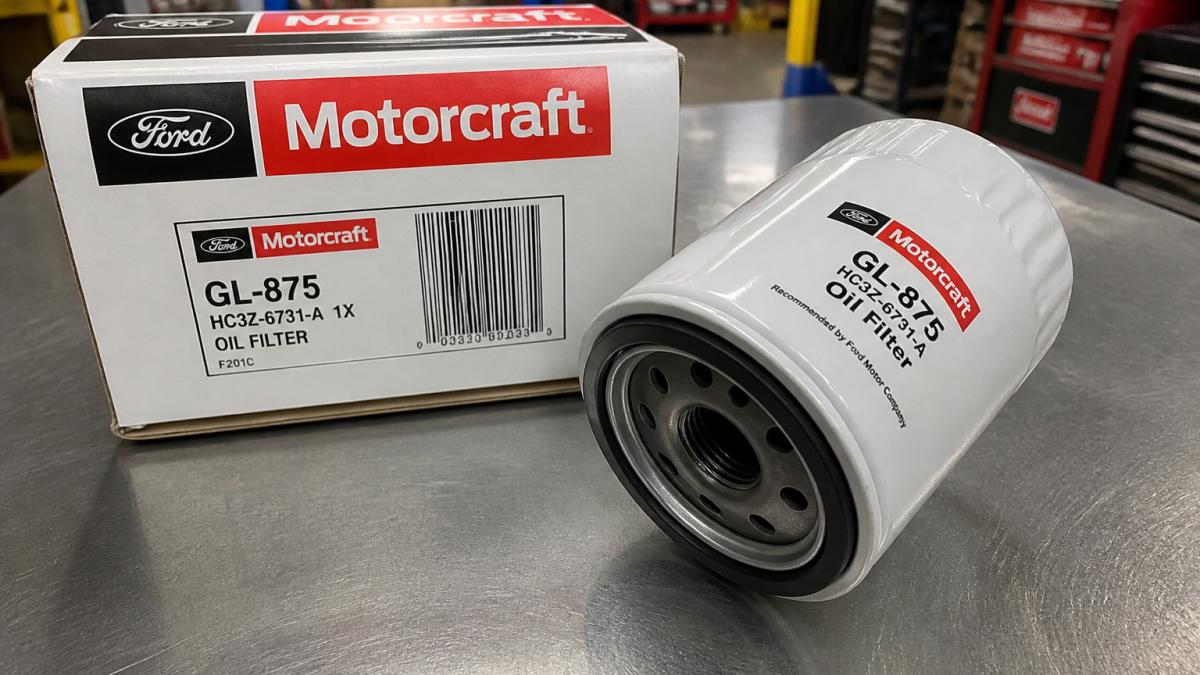
Motorcraft parts display the Motorcraft branding prominently on both the part and its packaging. Look for the Motorcraft logo, which guarantees the part meets Ford's quality standards. The packaging also includes installation instructions and warranty information specific to that component.
Avoid purchasing parts from unmarked or unclear sources. Counterfeit parts exist in the market, particularly for high-demand components like batteries and filters. Buy from authorized Ford dealers, reputable automotive retailers, or directly through Ford's parts ordering system to ensure authenticity. When you order through Rusty Eck Ford, you receive genuine parts backed by manufacturer verification.
Motorcraft Parts Warranty Coverage and Protection
Motorcraft parts come with manufacturer warranty protection that covers defects in materials and workmanship. The specific coverage period depends on the part category and your vehicle's warranty status.
Understanding the relationship between Motorcraft warranty and your vehicle's factory warranty is critical. If your vehicle is still under factory warranty and you install a genuine Motorcraft part through an authorized Ford dealer, that part's coverage aligns with your factory warranty period. If your factory warranty has expired, the Motorcraft part's independent warranty becomes your protection. This distinction matters because it determines how long you're covered and what happens if a part fails.
Warranty claims require proof of purchase and, in most cases, proof of proper installation. When you purchase a Motorcraft part from an authorized dealer and have it installed by a Ford service center, the dealer maintains a service record that documents the installation date, mileage, and part number. If the part fails during the warranty period, you return to the dealer with your receipt and vehicle service history. The dealer inspects the failed part to confirm the failure is due to a manufacturing defect rather than misuse, improper installation, or lack of maintenance. If the defect is confirmed, the dealer replaces the part at no cost or refunds your purchase price.
Warranty exclusions are equally important to understand. Motorcraft warranties do not cover damage resulting from improper installation, use of incompatible fluids or components, collision or accident damage, or failure to perform scheduled maintenance. For example, if a Motorcraft oil filter fails because you exceeded the recommended oil change interval by thousands of miles, the warranty claim may be denied because lack of maintenance contributed to the failure. Similarly, if you install a Motorcraft transmission fluid but use a non-genuine coolant that contaminates the system, warranty coverage on the transmission fluid may not apply. Some warranties also exclude coverage if the part is installed by a non-authorized technician, so always verify that your service provider is Ford-certified before installation.
Transferability is another consideration for long-term owners. If you sell your vehicle, Motorcraft warranty coverage on parts installed during your ownership typically transfers to the new owner for the remainder of the warranty period, provided the original receipt and service records are available. This adds resale value because the new owner inherits the parts warranty protection.
How to Find the Right Ford Replacement Part for Your Vehicle
Finding the correct Ford replacement part requires knowing your vehicle's identification number (VIN) and the specific component you need to replace. Your VIN contains information about your vehicle's year, model, engine type, and other specifications that determine which parts fit correctly.
Start by identifying what you need to replace. Is it a maintenance item like an oil filter or air filter? A wear item like brake pads or spark plugs? Or a more complex component like a water pump or alternator? Each category has specific part numbers and compatibility requirements.
Contact your local Ford dealership or authorized parts retailer with your VIN and the component you need. They can cross-reference your vehicle's specifications and provide the exact part number. Many dealerships, including Rusty Eck Ford, offer online parts ordering systems where you can search by VIN, making the process faster and more convenient.
Consider your vehicle's age and mileage when selecting parts. Newer vehicles may still be under factory warranty, and using genuine parts preserves that coverage. Older vehicles benefit from genuine parts because they maintain the performance standards your vehicle was engineered to achieve.
Long-Term Value: Why Genuine Parts Save Money Over Time
The upfront cost of genuine Ford and Motorcraft parts is typically higher than comparable aftermarket alternatives, depending on the component. However, the total cost of ownership, which includes purchase price, expected lifespan, labor, repeat repairs, and warranty value, often favors genuine parts over the vehicle's ownership period.
Consider a concrete example: a Motorcraft battery for a mid-size Ford sedan is engineered to deliver consistent performance in your vehicle's electrical system. An aftermarket battery may carry a shorter warranty and could fail prematurely due to lower-grade internal components or poor integration with your vehicle's charging system. The Motorcraft battery, if it lasts as designed, costs less per month of service and eliminates the risk of a stranded vehicle.
The hidden costs of premature part failure extend beyond the replacement part itself. A failed alternator, for example, may seem like a straightforward repair. However, if an aftermarket alternator fails suddenly while you're driving, it may leave you stranded on the highway, requiring a tow truck, emergency roadside service, and lost time. If the failure damages related components, such as the battery or serpentine belt, repair costs multiply.
Brake components illustrate the safety and cost trade-off clearly. Genuine Ford brake pads are engineered to match your vehicle's brake system's pressure, temperature, and stopping distance specifications. Aftermarket brake pads may use different friction materials that wear faster, require more frequent replacement, or reduce braking performance in emergency situations. Over the life of the vehicle, you might replace genuine brake pads less frequently than aftermarket pads.
Resale and trade-in value is a measurable benefit of using genuine parts throughout ownership. Vehicles with documented service histories showing genuine Ford and Motorcraft parts maintenance command higher trade-in values compared to vehicles with mixed or unknown parts histories. Over the life of the vehicle, this premium often exceeds the cumulative difference in parts costs.
Long-term ownership costs also include the time and inconvenience of unexpected repairs. Genuine parts reduce the probability of failures, which means fewer unscheduled trips to the repair shop, less downtime, and more predictable maintenance schedules. For owners who rely on their vehicles for work or family transportation, this reliability translates into avoided disruptions. For business owners managing multiple vehicles, reduced failure rates lower overall fleet maintenance costs and improve vehicle availability.
Finally, using genuine parts preserves your vehicle's factory warranty coverage on related systems. If you install a non-genuine part and it causes damage to a neighboring system, the factory warranty on that system may be voided. For example, using a non-OEM coolant in a genuine cooling system could void warranty coverage on the engine block or water pump if the coolant causes corrosion. This risk is eliminated when you use genuine parts throughout the vehicle's warranty period.
Frequently Asked Questions
Is Motorcraft the same as Ford OEM parts?
Motorcraft is Ford's parts brand, but not all genuine Ford parts are Motorcraft. Motorcraft parts are manufactured to Ford's specifications and sold through Ford dealerships. Some genuine OEM parts come directly from Ford suppliers. Both meet Ford's quality standards and vehicle-specific design requirements, but Motorcraft is Ford's primary aftermarket parts line for owners maintaining their vehicles outside of original assembly.
How can you tell if a Ford part is OEM or aftermarket?
Check the part number on the packaging and the part itself. Genuine Ford and Motorcraft parts display Ford part numbers, proper packaging with branding, and holographic security labels. Purchase only from authorized dealers like Rusty Eck Ford. Aftermarket parts typically lack official Ford markings and come from third-party manufacturers. Always verify the part number matches your vehicle's specific make and model to ensure exact fit and compatibility.
Are genuine Ford parts covered by a warranty?
Yes, Motorcraft parts come with warranty coverage when installed by a Ford dealership. Some components, like batteries, may have extended coverage. Warranty terms vary by part type and installation location. Always ask about specific warranty details when purchasing parts, and keep your receipt and installation documentation to file warranty claims if needed.
Why do genuine Ford parts cost more than aftermarket options?
Genuine Ford and Motorcraft parts undergo rigorous testing and quality control to meet Ford's safety and performance standards. They're designed for exact fit and finish on your specific vehicle model, reducing installation issues and compatibility problems. The higher purchase price often translates to longer service life, fewer replacement intervals, and lower total repair costs over time. Additionally, warranty coverage and dealership support add value that generic parts don't provide.