 blog
7 Ways to Improve 2026 Ford F-150 Fuel Economy
Table of Contents
- 2026 Ford F-150 Fuel Economy by Engine and Drivetrain
- How to Improve Ford F-150 Gas Mileage: 7 Steps That Work
- Ford F-150 Eco Mode Fuel Economy: What to Expect
- F-150 Tire Pressure and Gas Mileage: The Cheapest Gain
- Ford F-150 Fuel Economy Modifications That Are Worth It
- How to Track Real-World MPG in Your 2026 F-150
- Conclusion
- Frequently Asked Questions
Last Updated: October 20, 2026
2026 Ford F-150 Fuel Economy by Engine and Drivetrain
The 2026 Ford F-150 fuel economy story starts with one number: 25 combined MPG. That's what the PowerBoost Hybrid returns in 4x2 form, and it's the best figure in the lineup, according to Power Ford's 2026 F-150 fuel economy guide. At Rusty Eck Ford, we field the same question every week: can you actually hit those numbers? Below, we'll show you exactly how to close the gap, with seven steps that cost little or nothing to try.
First, the honest baseline. Here's what each 2026 powertrain is rated to return:
| Powertrain | 2WD Combined | 4WD Combined |
|---|---|---|
| PowerBoost Hybrid | 25 MPG | 23 MPG |
| 2.7L EcoBoost V6 | 21 MPG | 19-20 MPG |
| 3.5L EcoBoost V6 | Varies by config | Varies by config |
| Raptor R | 12 MPG | 12 MPG |
What Each 2026 Powertrain Actually Returns
The hybrid wins, and it isn't close. Power Ford lists the PowerBoost at 25 city, 26 highway, and 25 combined in 4x2, dropping to 22 city, 24 highway, and 23 combined with 4x4. The 2.7L EcoBoost V6 lands at 19 city, 25 highway, and 21 combined, per Bob Swope Ford's 2026 fuel economy page. A dealer guide pegs the full lineup's range at 24 combined MPG down to 12 for the 720-horsepower Raptor R, Dave Arbogast's 2026 F-150 MPG guide reports.
Why 2WD Beats 4WD at the Pump
Four-wheel drive adds weight and drivetrain drag. Power Ford puts the penalty at 1-2 combined MPG across most engine options. That sounds small until you run the math over 15,000 miles: roughly 25 to 50 extra gallons a year. If you don't need the traction, 2WD pays you back every fill-up.
How to Improve Ford F-150 Gas Mileage: 7 Steps That Work
Here's the practical answer: most owners can recover 1-3 MPG by changing habits before spending a dime on parts. That's the core of how to improve Ford F-150 gas mileage, and it's where we'd start every time. Work through these seven steps in order, and measure each one against a baseline tank so you know what actually moved the needle on your truck.
Before you start, establish a baseline. Fill the tank at the same pump, reset the trip meter, drive your normal week, and refill. Divide miles by gallons pumped. That number, not the dashboard estimate, is what you're trying to beat. Then change one variable at a time and run at least two tanks before judging.
Step 1: Ease Off the Throttle
Aggressive acceleration burns fuel you never recover. Smooth, progressive pedal pressure keeps the 10-speed automatic shifting early and the engine in its efficient range. The mechanism is simple: hard launches keep the torque converter unlocked and hold lower gears longer, and every extra second in a low gear costs fuel. A common pattern is that owners who consciously roll onto the throttle see the trip computer climb within a week. Expect the largest gain in city and stop-and-go driving; highway cruising is dominated by speed, not launch style.
Step 2: Hold a Steady Highway Speed
Aerodynamic drag climbs with the square of speed, so the fuel penalty per MPH grows fast above 60 MPH. Cruising at 65 instead of 75 cuts fuel consumption noticeably on longer runs. Use cruise control on flat stretches and let the truck hold the speed for you; on hills, a light foot beats cruise control because the system chases the set speed. This is the single biggest lever on long interstate trips, and it costs nothing.
Step 3: Set Tire Pressure Correctly
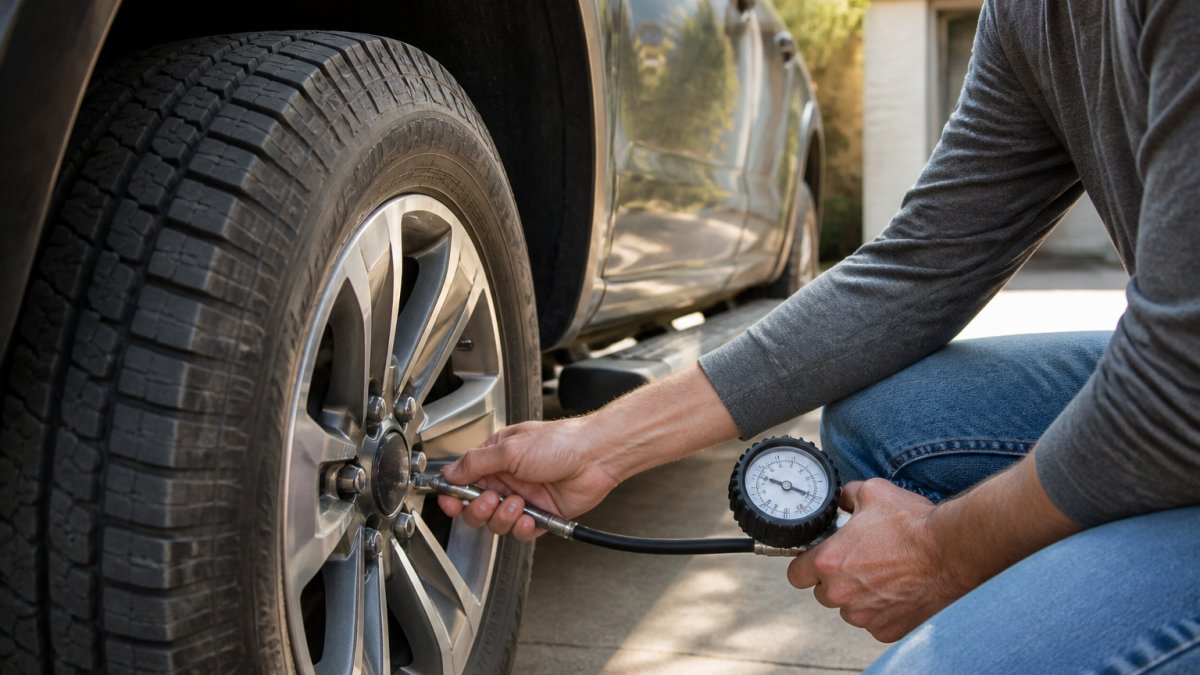
Check cold tire pressure monthly against the door-jamb sticker, not the number molded on the sidewall. Underinflated tires raise rolling resistance and cost you MPG; overinflating beyond the door-jamb spec trades a little rolling resistance for uneven wear and a harsher ride, so stay at the spec. This is the cheapest gain available, and it takes two minutes. Do it in the morning before the truck has been driven, since heat raises pressure and gives you a false reading.
Step 4: Switch to Eco Mode
Ford F-150 Eco mode fuel economy comes from remapped throttle response and earlier shifts. It softens acceleration, which is exactly the point, and it can change how the transmission behaves in stop-and-go traffic. Try it for one full tank and compare your trip computer readings against your baseline. Expect a modest gain in city driving and less on the highway, where speed dominates. Give it a full tank before judging.
Step 5: Cut Idling and Short Trips
Idling returns zero miles per gallon. Remote starts, drive-thru lines, and long warm-ups all drain the tank. Short trips hurt too, because the engine never reaches efficient operating temperature and the truck runs rich while it warms up. Combine errands into one loop, park and walk in instead of idling in line, and skip the remote start on mild mornings. This is one of the few changes that shows up immediately in your gallons-pumped math.
Step 6: Watch Payload and Towing
Every extra pound costs fuel, and towing multiplies the effect through added weight and aerodynamic drag. Hauling equipment for a small construction business? Expect lower MPG when loaded, and plan around it. Towing drops economy further, so budget for it rather than chasing ratings. The honest move is to know your loaded and unloaded numbers separately, so a bad tank after a tow week doesn't send you chasing a problem that isn't there.
Step 7: Keep Up With Maintenance
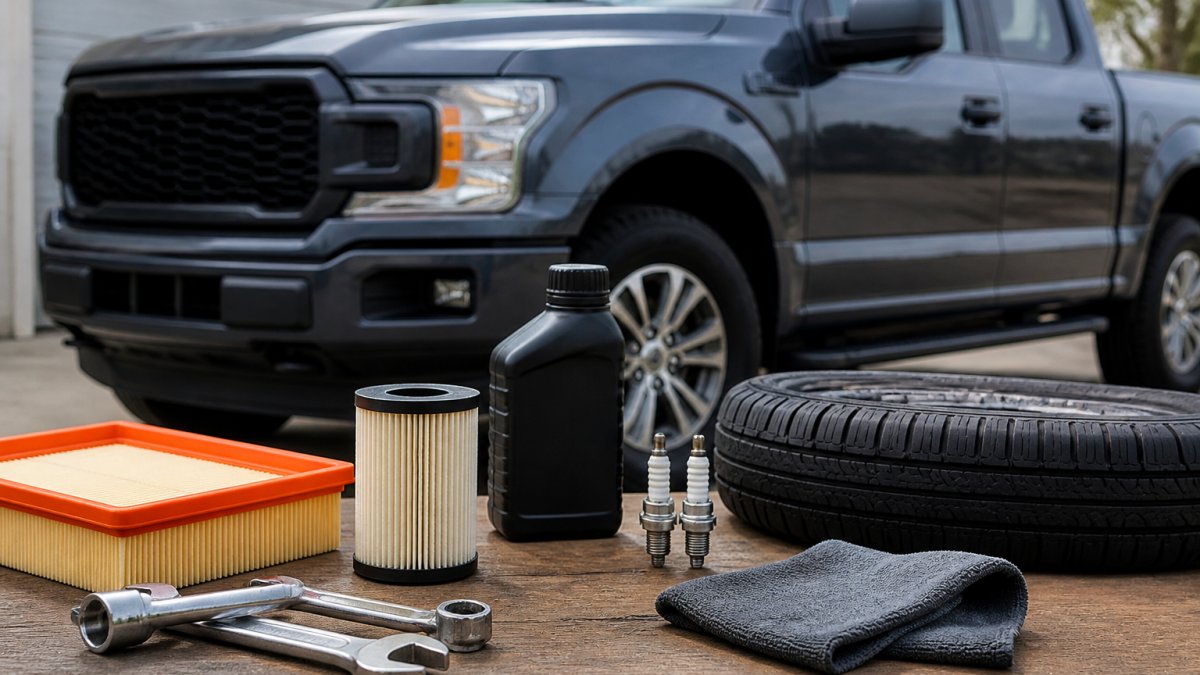
Follow the owner's manual schedule exactly. Fresh oil of the specified viscosity, a clean air filter, and healthy spark plugs keep engine performance where it should be. Skipping service quietly erodes fuel efficiency over time. Check the manual for the severe-duty schedule if you tow or haul regularly, and use the specified tire pressures and fluids. Avoid unsupported claims that particular additives or products improve MPG; the manual is the authority, and scheduled maintenance is the safe, warranty-friendly path.
Ford F-150 Eco Mode Fuel Economy: What to Expect
Eco mode won't transform a V8 into a hybrid. What it does is smooth out the inputs that waste fuel: throttle tip-in, shift points, and cruise behavior. Expect a modest gain in city driving, less on the highway where speed dominates. Owners report the biggest difference in stop-and-go traffic. Give it a full tank before judging.
F-150 Tire Pressure and Gas Mileage: The Cheapest Gain
F-150 tire pressure and gas mileage are directly linked. Ford's guidance is to check cold tire pressure monthly and match the door-jamb sticker, not the number molded on the sidewall. Tire size and tire choice matter too: heavier, wider tires raise rolling resistance. A Ford F-150 fuel-economy guide notes that driving style and tire choice both affect day-to-day MPG, so J.C. Lewis Ford's real-world MPG explainer stresses that ratings alone don't predict your results.
Ford F-150 Fuel Economy Modifications That Are Worth It
Most modifications don't pay back. A cold-air intake or louder exhaust rarely moves MPG enough to justify the cost. Tonneau covers help slightly by cutting drag. The honest answer: skip the parts catalog and fix your habits first. If you do modify, keep it warranty-safe and reversible. Payload, towing, idling, and short trips affect your numbers far more than bolt-ons ever will.
How to Track Real-World MPG in Your 2026 F-150
Run a controlled test. Fill the tank at the same pump, reset the trip meter, drive your normal week, then refill at the same pump. Divide miles driven by gallons pumped. Repeat three times for a real average. That's the skeleton, here's how to make the number trustworthy.
Use the pump, not the dashboard. The trip computer is an estimate based on injector pulse width and fuel level, and it can drift from reality, especially after idling or short trips. The pump is the ground truth. Log miles and gallons in a notes app or a fuel log, and keep the same pump and the same fill level (automatic shutoff) each time so you're comparing like with like.
Control the variables you can. Route, weather, and load all move MPG. A tank with a headwind, a cold snap, or a bed full of tools isn't comparable to a mild, empty week. Note the conditions next to each tank so you can explain a bad number instead of chasing a phantom problem. Tire pressure should be set cold and checked at the same interval each tank.
Compare across multiple tanks, not one. A single tank is noisy. Three to five tanks gives you an average that survives a windy day or a towing weekend. If you change a habit, say, Eco mode or a lower cruise speed, hold everything else steady and run at least two tanks before you credit or blame the change.
Treat anecdotes as anecdotes. One Reddit user posted test figures of 19.4 MPG city and 24.2 MPG highway for one configuration, versus 16.8 city and 20.1 highway for a 3.5 EcoBoost, per that owner's posted results. Those are useful as a sanity check, not benchmarks, different routes, loads, and driving styles explain most of the spread. Your own multi-tank average is the only number that matters for your truck.
Conclusion
Getting closer to your truck's rated MPG is mostly about habits, not hardware. Tire pressure, cruising speed, Eco mode, and maintenance do the heavy lifting. If you're shopping for a 2026 F-150 and want the most efficient setup, our team can walk you through the hybrid and 2WD options. Rusty Eck Ford offers competitive trade-in valuations, specialized financing programs, and on-site maintenance to keep your truck running at its best. Schedule a test drive and see the difference yourself.
Frequently Asked Questions
How do I make my F-150 get better gas mileage?
Start with the free changes: accelerate smoothly, hold a steady highway speed, and check cold tire pressure against the door-jamb sticker. Then use Eco mode for daily driving and cut unnecessary idling. Keeping up with maintenance per the owner's manual protects fuel economy over time. For 2026 models, the PowerBoost Hybrid 4x2 leads the lineup at 25 combined MPG, so your starting point matters as much as your habits.
Does using Eco mode improve Ford F-150 fuel economy?
Eco mode adjusts throttle response and transmission shift points to encourage gentler acceleration, which can reduce fuel consumption in stop-and-go driving. The gain depends on how you drive, and published EPA estimates do not include a separate Eco-mode rating. Try it for a full tank of commuting and compare your trip computer average to your normal driving. Many owners find the biggest difference in city driving, not steady highway cruising.
How does tire pressure affect F-150 gas mileage?
Underinflated tires increase rolling resistance, so the engine works harder to maintain speed. Check pressure when tires are cold and match the recommended cold tire pressure on the driver's door jamb, not the number molded on the sidewall. Tire size and tire choice matter too: larger, heavier tires with aggressive tread can pull real-world MPG below the EPA estimate. A monthly check is the cheapest fuel-economy habit you can build.
Does a tonneau cover improve Ford F-150 fuel economy?
A tonneau cover mainly protects cargo and deters theft. Claims of meaningful MPG gains are not backed by the model-year fuel-economy figures published for the 2026 F-150, and aerodynamic drag from an open bed is a small factor compared with speed and driving style. If you want a measurable improvement, focus on tire pressure, cruising speed, and smooth acceleration first. Treat covers, intake kits, and similar add-ons as comfort or utility purchases, not fuel savers.