 comparison
2026 Ford Truck Lease vs Buy: Benefits Explained
Table of Contents
- 2026 Ford Truck Lease vs Buy: The Core Trade-Off
- Cost to Lease vs Buy a Ford Truck
- Advantages of Leasing a 2026 Ford Truck
- Advantages of Buying and Financing
- Ford Truck Lease Mileage Limits and Wear Charges
- 2026 Ford F-150 Lease Deals and Offer Fine Print
- Ford Lease-End Purchase Option and Next Steps
- Which Path Fits Your Truck Use?
- Frequently Asked Questions
Last Updated: October 19, 2026
2026 Ford Truck Lease vs Buy: The Core Trade-Off
The 2026 Ford truck lease vs buy decision comes down to one question: do you want the lowest possible monthly payment, or do you want to own an asset at the end?
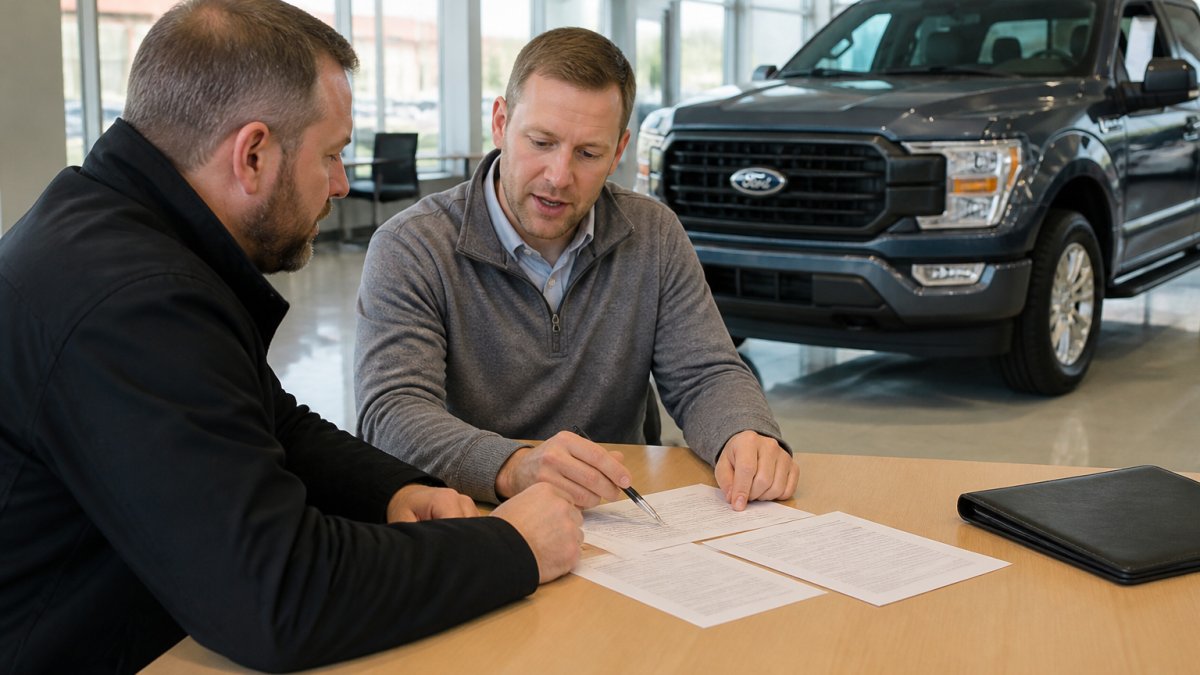
Cost to Lease vs Buy a Ford Truck
Leasing typically produces the lower monthly payment, while financing costs more per month but builds equity with every payment. That gap exists because a lease only covers the truck's projected depreciation during the term, plus rent charges, rather than the full vehicle price. A Ford financing-versus-leasing guide from Butler Ford notes that leasing often carries lower monthly payments while financing can cost less overall for someone who keeps the vehicle long term.
Monthly Payment vs Total Cost
Monthly payment and total cost are not the same number, and confusing them is the most common mistake we see. A lease payment looks smaller because you pay for a slice of the truck's life, not the whole thing; financing spreads the full price across the loan, so the payment is higher but the balance shrinks toward zero. If you trade every three years, compare lease payments to lease payments.
| Factor | Lease | Finance (Buy) |
|---|---|---|
| Monthly payment | Lower | Higher |
| Down payment | Often lower | Often higher |
| Mileage cap | Yes, with overage fees | None |
| Equity at end | None | Yes |
| Customization | Limited | Unrestricted |
| Best for | Short ownership, low mileage | Long ownership, high mileage |
The Mechanics Behind Each Payment
A lease payment is built from four inputs: capitalized cost (the negotiated price plus fees minus any lease cash or down payment), residual value (the projected value at term end, set as a percentage of MSRP), the money factor (the lease's version of an interest rate, quoted as a small decimal), and the term in months.
A finance payment is built differently: amount financed (price plus tax, title, and fees minus down payment and rebates), APR, and term. Every payment reduces principal, so the balance declines toward zero and the truck becomes an asset you own.
A Worked Example Framework for a 2026 F-150
Exact payments change monthly with programs, credit tier, inventory, and location, so treat the following as a framework rather than a quote.
Lease side, collect these numbers:
- MSRP and negotiated selling price
- Lease cash, rebates, and down payment (amount due at signing)
- Residual value percentage and the resulting dollar residual
Finance side, collect these numbers:
- Negotiated selling price plus tax, title, and fees
- Rebates and down payment
- APR and term in months
Then run two totals. For the lease, add all payments, the down payment, acquisition fee, and any disposition fee at turn-in; that is your cost of use for the term, and you own nothing at the end.
A common pattern: a shorter lease term with a high residual keeps the payment low but leaves little equity at the end, while a longer loan term lowers the payment but can leave the owner upside down if they sell early.
Where the Money Actually Goes
Three line items separate a good deal from a bad one:
- Amount due at signing. Advertised lease payments often assume a sizable down payment. A low headline payment with a large drive-off is not the same as a low-cost lease.
- Residual value. A higher residual lowers the lease payment but raises the buyout price at the end. If you plan to buy the truck out, a high residual works against you.
- Money factor and APR. These are negotiable in ways many shoppers do not realize. A small reduction in money factor or APR compounds across the whole term.
Ask for all three in writing before you sign, and compare them across two or three dealers on the same configuration.
Advantages of Leasing a 2026 Ford Truck
Leasing wins on cash flow and flexibility. You drive a new truck every few years, keep more money in your pocket each month, and skip the resale headache at the end. Many leases also bundle scheduled maintenance, which Consumer Reports' 2026 leasing overview notes can include oil changes and routine service. For a business owner who wants predictable monthly costs and a truck that stays under warranty for the entire term, that structure is hard to beat.
Advantages of Buying and Financing
Buying gives you the title, and the title gives you options. There is no mileage restriction, no wear-and-tear charge waiting at turn-in, and no one telling you not to add a lift kit or a bed rack. A McKie Ford buying-versus-leasing guide points to unrestricted mileage and ownership of a tangible asset as the core advantages of buying, while noting that buying generally means higher monthly payments.
Ford Truck Lease Mileage Limits and Wear Charges
Mileage limits are where leases bite, and trucks are exposed to more of them than sedans. Most truck leases allow a set number of miles per year, and every mile past that limit carries an excess-mileage charge at lease end. Wear-and-tear standards also apply: tires below a certain tread depth, excessive scratches, or a cracked windshield can trigger charges at return. Before you sign, ask three questions:
- What is the annual mileage allowance, and can I buy more upfront?
- What is the per-mile excess charge?
- What wear-and-tear standards apply at turn-in?
Why Trucks Hit Mileage Limits Harder
A truck used for work accumulates miles in ways a commuter car does not. Job-site runs, supply-house trips, trailer tows, and multi-stop days add up fast, and many of those miles are not the kind a low-mileage lease is priced for.
Before you choose a lease, estimate annual mileage from three sources: your commute, your work trips, and your towing or hauling trips. Add them, then add a buffer.
Towing, Hauling, and Wear Beyond the Odometer
Lease wear standards are written for normal passenger use, and truck work can push past them. Watch these areas:
- Bed and tailgate. Hauling gravel, lumber, or equipment can scratch the bed liner, dent the tailgate, or leave stains. A spray-in liner or bed mat protects the truck and reduces turn-in risk.
- Tires. Towing and heavy loads wear tires faster, and lease inspections check tread depth. Rotating tires and keeping them inflated to the load-appropriate pressure helps, but expect to replace tires before turn-in if you tow regularly.
- Suspension and brakes. Repeated heavy loads and trailer braking put more stress on components. Normal wear is expected; abuse is not, and the line between them is set by the inspection guide.
Commercial Use and Lease Contracts
Many leases restrict commercial use or require disclosure, and a truck registered to a business or used for deliveries may fall under different terms. Read the use clause before you sign. If the truck will be used for business, confirm in writing that the lease permits it, and keep a mileage log from day one, it supports both the tax conversation with your accountant and any mileage dispute at turn-in.
How to Protect Yourself at Turn-In
A pre-inspection a few months before the lease ends is the cheapest insurance you can buy. It identifies tires, glass, and body issues while you still have time to address them, and it lets you compare the buyout price to market value before you decide whether to return, buy out, or trade in. Keep your service records, take photos at turn-in, and ask for the inspection report in writing.
2026 Ford F-150 Lease Deals and Offer Fine Print
Ford lease offers change monthly, and the headline payment is rarely the whole story. The official Ford F-150 incentives and offers page lists current pricing, financing, and leasing options along with the incentives that may apply. Read the fine print on any 2026 Ford F-150 lease deal: the advertised payment usually assumes a specific trim, a set amount due at signing, a particular lease term, and a mileage allowance.
Ford Lease-End Purchase Option and Next Steps
Every Ford lease includes a purchase option at a set price, usually the residual value stated in your contract. At term end you have three choices, and the right one depends on the truck's market value versus your buyout price.
Return, Buy Out, or Trade In
- Return the vehicle: Walk away, pay any wear or mileage charges, and lease again.
- Buy out the lease: Pay the residual value, often with financing, and keep the truck.
- Trade in: If the truck is worth more than the buyout price, apply that equity toward your next vehicle.
Compare the buyout price to current market value before you decide. If the truck is worth more than the residual, buying out and trading in can put money back in your pocket.
Which Path Fits Your Truck Use?
Match the path to the work, not the other way around. Our team at Rusty Eck Ford can run both scenarios side by side for the exact F-150 you are considering, so you see the real numbers before you commit. Schedule a test drive and we will walk you through lease versus buy with your own mileage and budget in front of us.
Frequently Asked Questions
Is it better to lease or buy a Ford truck in 2026?
It depends on how long you keep the truck and how many miles you drive. Leasing usually means lower monthly payments and a new truck every few years, while financing costs more per month but builds equity and removes mileage caps. Ford dealership guidance notes that financing can cost less overall when you keep the vehicle long term. Compare the total cost to lease vs buy a Ford truck for your own ownership horizon before deciding.
Can you buy a 2026 Ford truck at the end of its lease?
Yes. A Ford lease-end purchase option lets you pay the residual value stated in your contract and keep the truck. Before you exercise it, check the buyout price against current market value and any remaining fees. If the truck is worth more than the residual, buying can make sense; if not, returning it may be cheaper. Ask the dealership for a written buyout figure so you can compare it with financing a different truck.
How do Ford truck lease mileage limits work?
Most pickup leases allow roughly 10,000 to 15,000 miles per year, according to general pickup-truck guidance. Go over that allowance and you pay excess mileage charges at lease end. Work trucks, fleet vehicles, and trucks used for towing often rack up miles fast, so estimate your annual mileage honestly before signing. If you expect heavy use, a higher mileage allowance or a purchase may cost less than overage fees.
What are the main benefits of leasing a 2026 Ford truck?
Leasing typically lowers the monthly payment, requires less due at signing, and keeps you in a newer truck with factory warranty coverage. Some leases include scheduled maintenance, and you avoid the risk of resale value swings because you return the vehicle instead of selling it. The trade-offs are mileage limits, wear-and-tear charges, and no equity. Leasing suits drivers who want lower payments and a new truck every few years.
Does buying a 2026 Ford truck cost less than leasing over time?
Often yes, if you keep the truck well past the loan term. Financing builds equity, and once the loan is paid off you drive without a payment while the truck still holds resale value. Leasing keeps you in a cycle of payments with nothing to show at the end. Run a side-by-side total-cost comparison for the specific F-150 trim and term you want, including incentives and APR, before you commit.
The lease-versus-buy call gets much easier when someone runs your actual numbers instead of a generic calculator. At Rusty Eck Ford, we offer competitive trade-in valuations, access to specialized financing programs, and a team that has guided local drivers and business owners through this decision since 1953. Get started with Rusty Eck Ford and drive home in the 2026 Ford truck that fits your budget and your work.